

If you've ever paid for a lead that turned out to be a wrong number, a price-shopper who never planned to hire anyone, or someone who'd already signed with a competitor by the time you called — you're not imagining it. The Federal Trade Commission investigated HomeAdvisor specifically for this, and the case is public record.
Short answer: for a lot of contractors, no — not consistently, and not without a real cost to your margins. Here's what actually happened, and what tends to work better long-term.
In 2024, the FTC filed a formal complaint against HomeAdvisor over how it represented the quality of leads sold to contractors. The case resulted in a $7.2 million consent order — a legal, verifiable outcome, not a rumor or a disgruntled review.
The core issue: contractors were paying for leads that the platform's own marketing implied were high-quality and likely to convert, when in practice a significant share were low-intent, duplicate, or simply unusable. This isn't a one-off complaint — it matches what shows up consistently across contractor review platforms and trade forums, where business owners describe the same pattern: paying per lead, then discovering many of those leads were people "just wondering" about price, not actually ready to hire.
The lead-generation model these platforms run on has a structural problem: they get paid whether or not the lead converts. A lead sold to five different contractors at once still counts as five sales for the platform — even though only one contractor can actually win that job, and the other four just paid for nothing.
This creates a mismatch in incentives. The platform's goal is lead volume. Your goal is lead quality. Those two goals aren't automatically aligned, and the FTC case is essentially official confirmation that they weren't.
Paying per lead doesn't just cost the sticker price of the lead itself. It usually costs:
Time spent on unqualified calls — following up with people who were never serious, or who already hired someone else
Margin compression — if you're paying for leads on top of your actual costs, your effective profit per job shrinks
No ownership of the asset — every dollar spent goes toward the platform's visibility, not yours. Stop paying, and the leads stop immediately, with nothing left behind
That last point is the one most contractors don't fully register until they've been doing it for a year or two: you're renting visibility, not building it.
The alternative isn't complicated, but it does take longer to show results than paying for leads does. Instead of renting traffic from a platform, the goal is to own the local visibility yourself — through your Google Business Profile, your website, and local SEO — so the calls come to you directly, without a per-lead fee attached to each one.
This looks like:
Ranking in the Google Maps pack for the searches your customers are actually making — "[your service] near me" style searches — without paying per click or per lead
A website built to convert the traffic you already have, instead of losing calls because the site is slow, unclear, or hard to contact
A properly optimized Google Business Profile, which for a lot of local businesses generates more calls directly than the website itself
The tradeoff is time — this isn't instant the way paying for leads is. But once it's built, it keeps generating calls without an ongoing per-lead cost eating into every job.
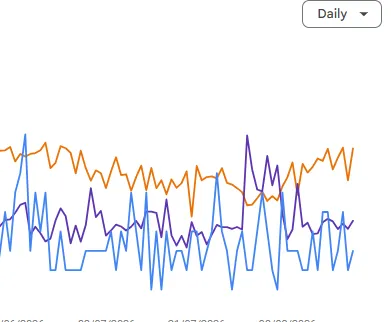
FAFCO Technical, a service business I've worked with directly, currently generates roughly 70–110 organic calls per month directly from Google Search and Google Maps — calls that didn't require paying a lead-generation platform for each one. (They also run Google Ads separately, which adds to this number, but the 70-110 figure is organic visibility only.)
This came from fixing technical SEO issues, properly optimizing the Google Business Profile, and building the website's internal structure so Google could clearly understand and trust the business. It's the same "own the asset" approach described above, applied to a real project.
See the Full FAFCO Case Study →Not necessarily, and not immediately. For a business with no existing online visibility, these platforms can still provide short-term lead flow while local SEO and Google Business Profile work builds up in the background — that process takes a few months to show real momentum, not a few days.
The realistic approach is usually a transition: keep the paid leads coming in while local visibility work is being built, then gradually reduce reliance on paid leads as organic calls increase. Cutting paid leads off entirely on day one, before anything else is in place, usually just creates a gap.